
Top 5 Advantages of Responsive Web Page Design

Bejoy Peter • May 22, 2020

Smartphone and tablet adoption rapidly increases, so does the importance of mobile-friendly websites.

Smartphones and tablets have changed the approach toward design and user experience. Before the spread of mobile devices with advanced web-browsing capability, web designers had only one primary challenge to deal with keeping the same look and feel of their websites. However, interacting with websites on smartphones and tablet is not the same as doing that on a desktop computer monitors. Factors such as Click versus Touch, Screen-size, Pixel-resolution, support for Adobe’s Flash technology, optimised markup and many more have become crucial while creating websites with a responsive design.


If SEO is a core component of your digital marketing strategy, having a mobile–friendly website is becoming essential. Mobile sales have already overtaken desktop sales, and mobile Internet usage is predicted to overtake desktop internet usage by 2014. It is only logical that mobile search will overtake desktop search at some point in the near future as well.


What is Responsive Web Design?

Responsive Web Design (RWD) is an approach of laying-out and coding a website such that the website provides an optimal viewing experience — ease of reading and navigation with a minimum of resizing, panning, and scrolling — across a wide range of devices (from desktop computer monitors to mobile phones).


Smart Device Ready Design

The designer creating a Responsive Design should ensure that the website’s navigation elements, screen-layouts, text, images, audio/video players and other UI elements re-adjust themselves on a variety of devices. Thus, one need not spend extra time and money in creating and maintaining one “mobile-site version” and another “desktop-site version” of her website.


Now, having understood what is a reponsive web design, let us check the advantages and why Responsive Design is important while creating websites.


Advantages of Responsive Design


1. Super Flexible

Responsive web design sites are fluid, meaning the content moves freely across all screen resolutions and all devices. Both the grids and the images are fluid. Just as a liquid spreads out or draws in to allow its content to fill an allotted space and retain its appearance, responsive web design’s fluidity achieves the same result with website content on a device screen.


2. Excellent User Experience - UX

While, content is king and discover ability of content are foremost success metrics, it is the user experience that enables visitors to consume content on any website through the device of their choice and preference, anytime. Thus, responsive web design is about providing the optimal user experience irrespective of whether they use a desktop computer, a smartphone, a tablet or a smart-TV. Responsive web design accommodates the busy professional during the day and the wide-awake college student needing access to your site anytime. No scrolling or resizing is needed for any visitor to access your website from their favourite device.


3. Cost Effective

The advantages of having a single site that conforms to the need of all devices are significant when compared to having two separate websites. One website costs less than two, and the savings can be substantial. Sites designed solely for mobile device traffic don’t offer the advanced navigational techniques found in traditional websites, and they also require the user to maintain two separate web addresses for your site. This is inconvenient for most people and can cause them to check out the competition’s website. Responsive web design enhances SEO efforts by having all your visitors directed to a single site no matter what they prefer to use as a device.


4. It is Recommended By Google

With 67 percent search market share, when Google speaks, search marketers listen. Google states that responsive web design is its recommended mobile configuration, and even goes so far as to refer to responsive web design as the industry best practice.


This is because responsive design sites have one URL and the same HTML, regardless of device, which makes it easier and more efficient for Google to crawl, index, and organise content. Contrast this with a separate mobile site which has a different URL and different HTML than its desktop counterpart, requiring Google to crawl and index multiple versions of the same site.


Additionally, Google prefers responsive web design because content that lives on one website and one URL is much easier for users to share, interact with, and link to than content that lives on a separate mobile site. Take for example a mobile user who shares content from a mobile site with a friend on Facebook who then accesses that content using a desktop, which results in that user viewing a stripped down mobile site on their desktop. This creates a less than optimal user-experience, and because of the large emphasis Google is now placing on user-experience as a ranking factor, this is essential to take into account with regards to SEO .


5. Very Easy to manage

Having a separate desktop and mobile site requires having separate SEO campaigns. Managing one site and one SEO campaign is far easier than managing two sites and two SEO campaigns. This is a key advantage a responsive website has over a separate mobile site. That being said, there are benefits to having a mobile-specific SEO strategy, such as optimising for keywords that are more likely to be searched when someone is on their smartphone. For example, someone performing a mobile search for a local restaurant may be more inclined to use the word “nearby” in their search query. However, a separate mobile site is not a requirement for a mobile SEO strategy, and there’s no reason why mobile-specific keywords can’t be incorporated into a responsive design site as well.


We the hope the article adds value to your business communication!


Best,

Bejoy Peter- Digital Creator & Communications Strategist

Email: info@VisionKraft.com | Phone: +91 9850 555 795


Vision Kraft Media Works Pvt. Ltd.

- the perception management tools company!
By Bejoy Peter June 12, 2026
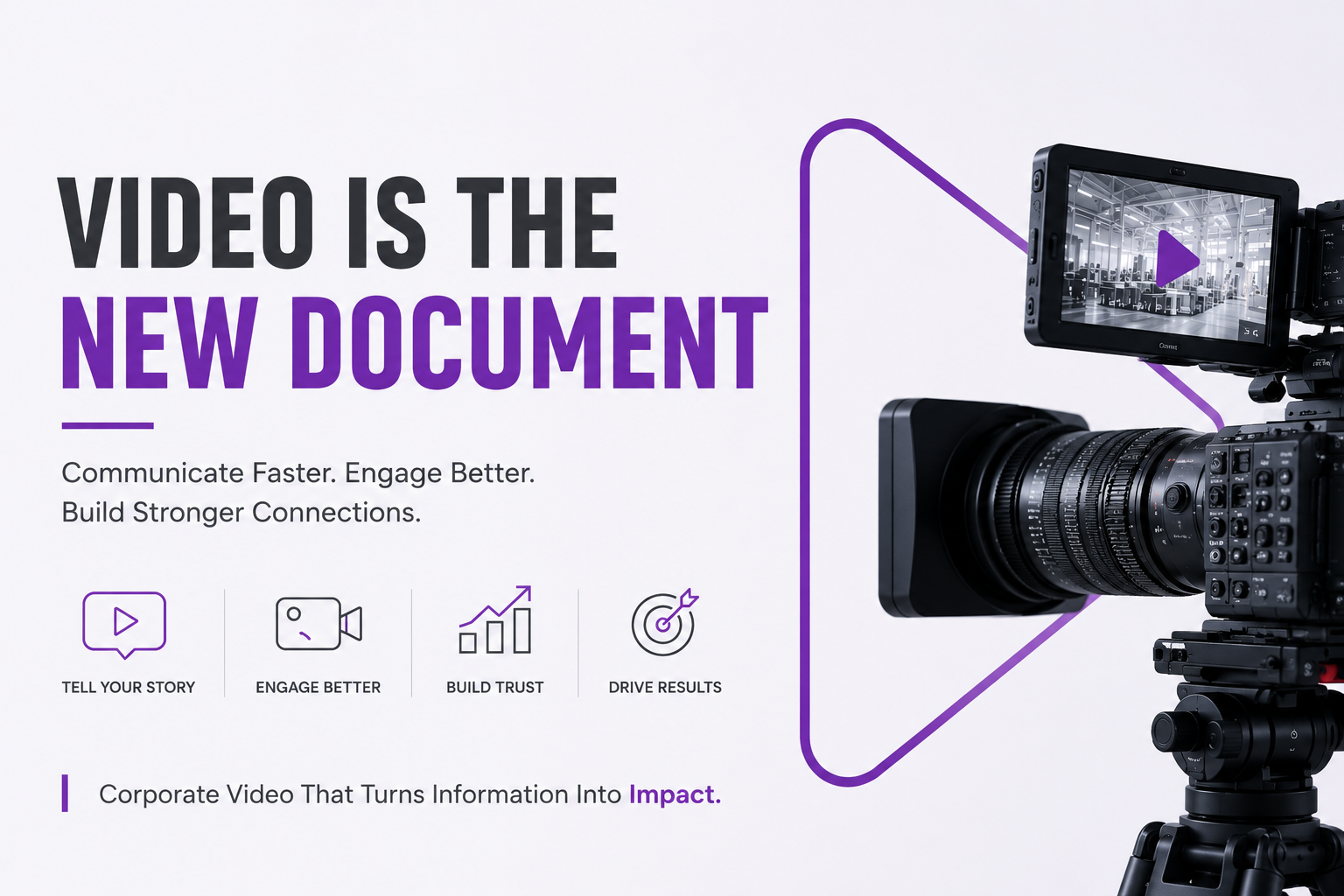
Video is the New Document: Why Modern Businesses Must Communicate Through Video
By Bejoy Peter April 2, 2026
For decades, manufacturing businesses have relied on relationships, referrals, and repeat clients to drive growth. And while those channels still matter, the buying journey has fundamentally changed.
By Bejoy Peter January 17, 2026
AI enhances manufacturing brands by refining strategies & insights. Learn how to leverage AI for better branding today!
By Bejoy Peter July 30, 2025
Going public is one of the most significant milestones for any company. An Initial Public Offering (IPO) is not just a financial event—it’s a brand-defining moment. While balance sheets and business models matter, investors buy into a company’s story, credibility, and promise of long-term value. That’s why branding and marketing should be treated as mission-critical pillars of your IPO readiness strategy.
By Bejoy Peter February 17, 2025
Elevate Your Brand with Strategic Spatial and Visual Branding Solutions
Three luxury cars lined up, including a red sports car and teal and silver Bentleys, on pavement.
By Bejoy Peter December 12, 2020
Understand why your brand's public perception is crucial. Enhance your corporate image with effective strategies. Contact us today!
By Bejoy Peter September 27, 2020
After all, YouTube is the number two search engine in the world!
By Bejoy Peter September 27, 2020
The truth of the matter is that most successful photographic compositions are in fact quite simple, there may be numerous objects but there is never any doubt as to what the subject actually is...
White brick wall with framed sign reading “WE LIKE YOU. TOO :)” under green vines
By Bejoy Peter June 17, 2020
Learn why great content is essential for lead nurturing in digital marketing. Boost engagement & sales with effective strategies.
Sales Emails
By Bejoy Peter June 3, 2020
You’ll send a lot of prospecting emails and InMails in 2020- and you’ll spend a fair bit of time racking your brains for the combination of words and phrases to improve your response rate. Okay, so maybe that wasn’t the most original prediction that you’ve heard, but it’s certainly one of the most pertinent. The art and science of selling has evolved in many ways: leveraging networks for warm introductions, prospecting intelligently on social media , leading with content, building personal brands prior to reaching out. However, there are aspects of our craft that haven’t changed, and which we wouldn’t necessarily expect to. Knowing the right combination of words to earn attention, entice someone to read, and provide a compelling reason to respond is one of them. Sales people have been testing different approaches from the days when they first put ink pen to paper. It’s the same persuasive challenge today as it was then. The key to prospecting efficiently and effectively through email and InMail is not starting with a blank subject line and screen each time. Prospecting emails and InMails need to feel distinct and individually relevant – but experience shows they are most effective when they follow one of five broad outlines. Our own sales teams at LinkedIn swear by these: five core templates to suit different prospects , different situations , and different stages of the buyer journey: 1. The Common Ground Approach: If you’re researched a prospect online prior to reaching out, then this is the template for taking advantage of that work. It’s built around a mutual interest, hobby or acquaintance, and a current reason for reaching out. Crucially, it doesn’t attempt to translate this common ground towards a deal immediately. The focus is more on building rapport. It’s important to get the balance right with this style of outreach – you want to come across as informed, not creepy. Lost for words? Here’s your starting template for inspiration: Subject line: [Prospect Name], Jessie recommended I reach out Message: Hi [Prospect Name], Our mutual connection, [connection name], and I were talking recently about [hot topic]. She said you were an expert on this issue. I’m writing an article about [hot topic] because it’s relevant, timely, yet confusing to many of my customers. Can I include your perspective, [Prospect Name]? Regards, [Your Name] 2. The Problem-Solver Approach: What do B2B buyers really want from sales people? Applied insight and information that’s relevant to their specific business. If your prospecting has uncovered evidence of a current business need, then this is the template to help leverage that in your outreach. A key question to consider is whether to mention your solution – or save that for later. It comes down to your individual judgment – but a thought leadership asset like a relevant guide or white paper can be a very effective way of introducing your expertise without hitting them over the head with it. Lost for words? Here’s a starting template for inspiration: Subject line: [Prospect Name], How to put an end to [problem] Message: Hi [Prospect Name], Your LinkedIn post discussing how your company is struggling to overcome [problem] made me think of others I know experiencing the same frustration. What seems to work is when companies tackle these three core issues: • Lack of integrated systems • Manual processes • Unawareness about the latest options [Prospect Name], let me know if you’d like me to send an eBook my company put together that spells out how to effectively address these issues. Regards, [Your Name] 3. The Case Study Approach: Human beings love a good story – and smart sales reps know it. According to the 2017 B2B Buyers Survey from Demand Gen Report, 67% of those making purchase decisions rely on peer recommendations and 41% rely on case studies. That means a prospecting email that can persuasively introduce a customer story is a hugely valuable asset. Lost for words? Here’s a starting template for inspiration: Subject line: [Prospect Name], Here’s how to drive X% higher revenues Message: Hi [Prospect Name], Your latest company blog post showcases your strategic initiative to do [initiative name]. Congratulations on spearheading such an important endeavour! As you prepare to move forward, you’ll be interested to learn how others in your position pulled off the same project successfully. In fact, I know of [prospect’s role] in three companies very similar to yours that generated an average of 17% higher revenues by using [your solution] to power their new processes. [Prospect Name], let me know if you’d like me to forward the case studies detailing how they achieved such impressive results. Regards, [Your Name] 4. The Giver Approach: You’d be hard pressed to find someone who passes on a free offer, if it’s something of actual value to them. Use that to your advantage when sending an email to prospective buyers. Whether you’re offering an ebook, a free trial, or a free evaluation, make the offer the focal point of your email. The more exclusive or insightful it is, the more likely it is that your prospect will see it as valuable. Lost for words? Here’s a starting template for inspiration: Subject line: [Prospect Name], find out how your website stacks up Message: Hi [Prospect Name], Your content-rich website is visually stunning, but I ran a free performance test that shows it might not be loading quickly enough for your site visitors. Would you like to see the results and how your site compares to the competition? Regards, [Your Name] 5. The No-Nonsense Approach: According to Boomerang analysis of 40 million sales emails, the sweet spot for length is 50-125 words. That means it often pays to be straightforward. Consider using bullet points to quickly point out how your solution benefits your prospective client. Lost for words? Here’s a starting template for inspiration: Subject line: [Prospect Name 1], [Prospect Name 2], and [Prospect Name 3], thoughts on [product]? Message: Hi [Prospect Name 1], [Prospect Name 2] and [Prospect Name 3] Now that you have trial-ed [product] for three months, I want to confirm you are experiencing the impact we discussed: • Less manual data entry • Faster financial closings • More accurate monthly reports What are next steps to get you signed up for an enterprise license, so your entire finance team can take advantage of [product]? Regards, [Your Name] We the hope the article adds value to your business communication! Best, Bejoy Peter- Digital Creator & Communications Strategist Email: info@VisionKraft.com | Phone: +91 9850 555 795 Vision Kraft Media Works Pvt. Ltd. - the perception management tools company!