
5 templates for Sales Emails and InMails- that really work!
Bejoy Peter • June 3, 2020
Outreach inspiration for different situations and stages of the buyer journey
You’ll send a lot of
prospecting
emails and InMails in 2020- and you’ll spend a fair bit of time racking your brains for the combination of words and phrases to
improve your response rate.
2. The Problem-Solver Approach:
Okay, so maybe that wasn’t the most original prediction that you’ve heard, but it’s certainly one of the most pertinent. The art and
science of selling has evolved
in many ways: leveraging networks for warm introductions,
prospecting intelligently on social media , leading with content,
building personal brands
prior to reaching out. However, there are aspects of our craft that haven’t changed, and which we wouldn’t necessarily expect to. Knowing the right combination of words to earn attention, entice someone to read, and provide a compelling reason to respond is one of them. Sales people have been testing different approaches from the days when they first put ink pen to paper. It’s the same persuasive challenge today as it was then.
The key to
prospecting efficiently and effectively through email and InMail
is not starting with a blank subject line and screen each time. Prospecting emails and InMails need to feel distinct and individually relevant – but experience shows they are most effective when they follow one of five broad outlines. Our own sales teams at LinkedIn swear by these: five core templates to suit
different prospects ,
different situations , and different stages of the
buyer journey:
1. The Common Ground Approach:
If you’re researched a prospect online prior to reaching out, then this is the template for taking advantage of that work. It’s built around a mutual interest, hobby or acquaintance, and a current reason for reaching out. Crucially, it doesn’t attempt to translate this common ground towards a deal immediately. The focus is more on building rapport. It’s important to get the balance right with this style of outreach – you want to come across as informed, not creepy.
Lost for words? Here’s your starting template for inspiration:
Subject line:
[Prospect Name], Jessie recommended I reach out
Message:
Hi [Prospect Name],
Our mutual connection, [connection name], and I were talking recently about [hot topic]. She said you were an expert on this issue.
I’m writing an article about [hot topic] because it’s relevant, timely, yet confusing to many of my customers. Can I include your perspective, [Prospect Name]?
Regards, [Your Name]
2. The Problem-Solver Approach:
What do B2B buyers really want from sales people? Applied insight and information that’s relevant to their specific business. If your prospecting has uncovered evidence of a current business need, then this is the template to help leverage that in your outreach. A key question to consider is whether to mention your solution – or save that for later. It comes down to your individual judgment – but a thought leadership asset like a relevant guide or white paper can be a very effective way of introducing your expertise without hitting them over the head with it.
Lost for words? Here’s a starting template for inspiration:
Subject line:
[Prospect Name], How to put an end to [problem]
Message:
Hi [Prospect Name],
Your LinkedIn post discussing how your company is struggling to overcome [problem] made me think of others I know experiencing the same frustration. What seems to work is when companies tackle these three core issues:
• Lack of integrated systems
• Manual processes
• Unawareness about the latest options
[Prospect Name], let me know if you’d like me to send an eBook my company put together that spells out how to effectively address these issues.
Regards, [Your Name]
3. The Case Study Approach:
Human beings love a good story – and smart sales reps know it. According to the 2017 B2B Buyers Survey from Demand Gen Report, 67% of those making purchase decisions rely on peer recommendations and 41% rely on case studies. That means a prospecting email that can persuasively introduce a customer story is a hugely valuable asset.
Lost for words? Here’s a starting template for inspiration:
Subject line:
[Prospect Name], Here’s how to drive X% higher revenues
Message:
Hi [Prospect Name],
Your latest company blog post showcases your strategic initiative to do [initiative name]. Congratulations on spearheading such an important endeavour!
As you prepare to move forward, you’ll be interested to learn how others in your position pulled off the same project successfully. In fact, I know of [prospect’s role] in three companies very similar to yours that generated an average of 17% higher revenues by using [your solution] to power their new processes.
[Prospect Name], let me know if you’d like me to forward the case studies detailing how they achieved such impressive results.
Regards, [Your Name]
4. The Giver Approach:
You’d be hard pressed to find someone who passes on a free offer, if it’s something of actual value to them. Use that to your advantage when sending an email to prospective buyers. Whether you’re offering an ebook, a free trial, or a free evaluation, make the offer the focal point of your email. The more exclusive or insightful it is, the more likely it is that your prospect will see it as valuable.
Lost for words? Here’s a starting template for inspiration:
Subject line:
[Prospect Name], find out how your website stacks up
Message:
Hi [Prospect Name],
Your content-rich website is visually stunning, but I ran a free performance test that shows it might not be loading quickly enough for your site visitors.
Would you like to see the results and how your site compares to the competition?
Regards, [Your Name]
5. The No-Nonsense Approach:
According to Boomerang analysis of 40 million sales emails, the sweet spot for length is 50-125 words. That means it often pays to be straightforward. Consider using bullet points to quickly point out how your solution benefits your prospective client.
Lost for words? Here’s a starting template for inspiration:
Subject line:
[Prospect Name 1], [Prospect Name 2], and [Prospect Name 3], thoughts on [product]?
Message:
Hi [Prospect Name 1], [Prospect Name 2] and [Prospect Name 3]
Now that you have trial-ed [product] for three months, I want to confirm you are experiencing the impact we discussed:
• Less manual data entry
• Faster financial closings
• More accurate monthly reports
What are next steps to get you signed up for an enterprise license, so your entire finance team can take advantage of [product]?
Regards, [Your Name]
We the hope the article adds value to your business communication!
Best,
Bejoy Peter- Digital Creator & Communications Strategist
Email: info@VisionKraft.com | Phone: +91 9850 555 795
Vision Kraft Media Works Pvt. Ltd.
- the perception management tools company!
We the hope the article adds value to your business communication!
Best,
Bejoy Peter- Digital Creator & Communications Strategist
Email: info@VisionKraft.com | Phone: +91 9850 555 795
Vision Kraft Media Works Pvt. Ltd.
- the perception management tools company!
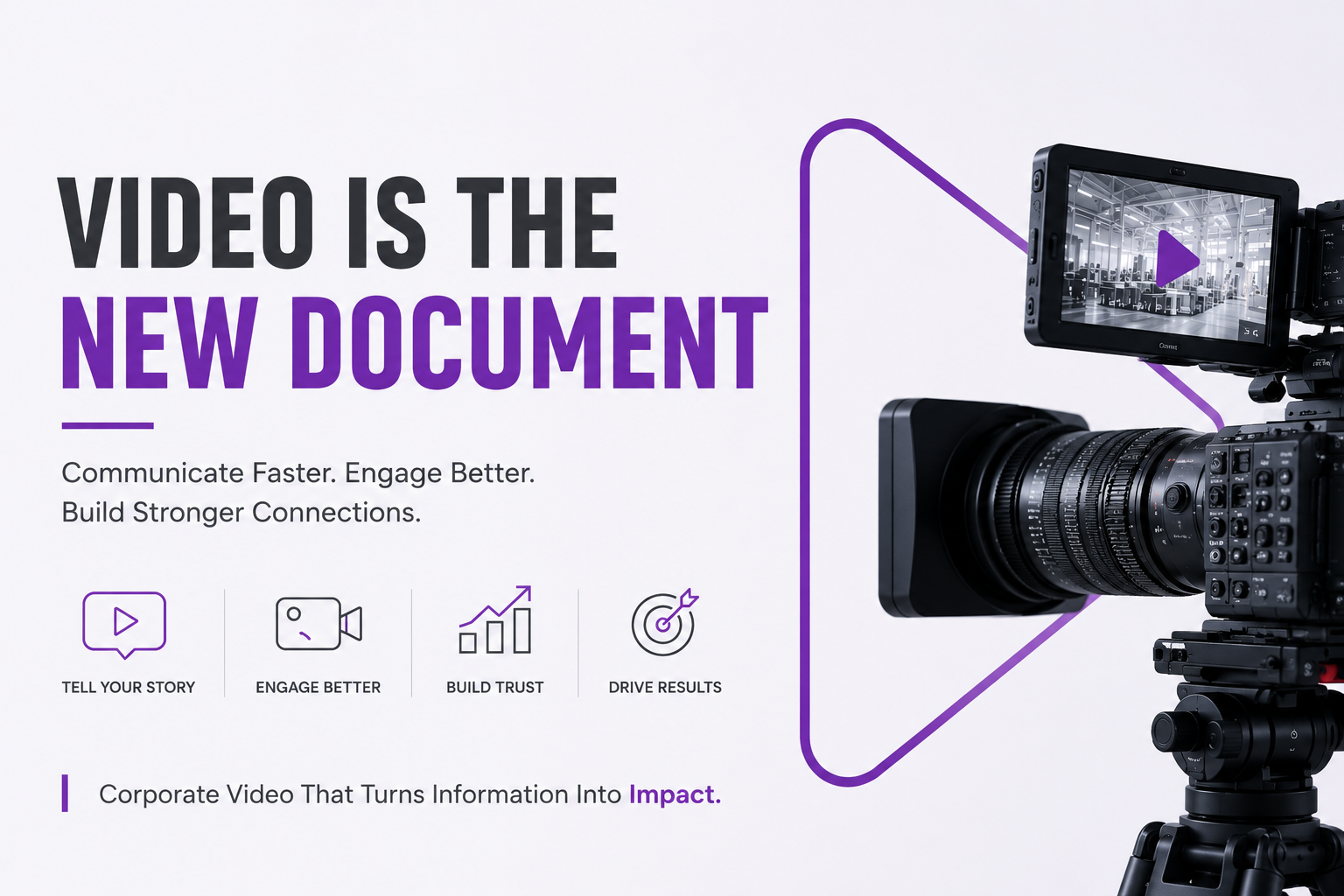
Video is the New Document: Why Modern Businesses Must Communicate Through Video

For decades, manufacturing businesses have relied on relationships, referrals, and repeat clients to drive growth. And while those channels still matter, the buying journey has fundamentally changed.

AI enhances manufacturing brands by refining strategies & insights. Learn how to leverage AI for better branding today!

Going public is one of the most significant milestones for any company. An Initial Public Offering (IPO) is not just a financial event—it’s a brand-defining moment. While balance sheets and business models matter, investors buy into a company’s story, credibility, and promise of long-term value. That’s why branding and marketing should be treated as mission-critical pillars of your IPO readiness strategy.

Elevate Your Brand with Strategic Spatial and Visual Branding Solutions

Understand why your brand's public perception is crucial. Enhance your corporate image with effective strategies. Contact us today!

After all, YouTube is the number two search engine in the world!

The truth of the matter is that most successful photographic compositions are in fact quite simple, there may be numerous objects but there is never any doubt as to what the subject actually is...

Learn why great content is essential for lead nurturing in digital marketing. Boost engagement & sales with effective strategies.

When you start your business , many things have to be taken into account. Amongst the tons of seemingly more important things, you might question the need for using Facebook. Often people end up feeling that it is too trivial a task and can be accomplished at anytime. Here are some reasons why you should have your presence on a social networking giant like Facebook and take it very seriously: Customer Interaction: Having your business on Facebook through a fan-page or a group is a great way to learn more about your customers. Through comments or posts, you get to have direct feedback and conversations with your target audience . The people who like your fan-page or join your group are only there because they want to be. They are there to know what they can about you and you can do the same thing. Give a personal touch to your business: Being well connected is important for any business, especially for a small one. You need to be able to communicate with people and grow your contacts. The best possible way to do that is through direct involvement. Facebook allows you to give your business an image and then you can actually have live conversations with people who matter, making it a more personal experience than what you get on a TV. Develop a loyal fan base: Facebook allows you to develop your very own community. All you need to do is, post links and content that is both relevant and useful. You can even have promotional campaigns and contests through your page and offer incentives as well. If done correctly, you will find that you can develop a loyal community for your business on Facebook. SEO: Search Engine Optimisation is a key aspect for anyone who wants to build a significant presence on the web. Having a Facebook page for your business can help you in your SEO efforts as well. All the links and posts on the page are indexed by search engines. So having a page flowing with continuous relevant content will definitely give you a jump in search engine rankings. Beat your competition: One of the biggest reasons for you to make sure that you are on Facebook is that your competition might already be there. In this cut throat environment, lagging behind will make it really hard for your business to succeed. Viral promotion: If someone ends up liking your page then it appears in their news feed. This makes it possible for your business to be in their eyes on a regular basis through status updates or content posting. What’s more, if they comment on your post, their friends will also see your post and this will help in viral promotion of your business. Facebook Ads: Your business at Facebook is not just limited to a fan page or a group. Facebook also offers you a chance to put up advertising campaigns. You can build your advertisements, and as per your budget requirements, go for a campaign suitable for your business. You can also choose the set of people to whom these ads will be visible. You can target your ads on the basis of demographics, educational level, interests etc. It is also up to you to decide how often these ads will appear. Save money: Apart from these facts, Facebook is free. You do not need to spend anything for promoting your company through a Facebook page. Facebook already has people addicted to it. This means you do not have to look for customers – they are already there. Today when you look at Facebook and the groups or fan pages that exist on the site, you will find that every popular brand is there. They are not only there but are active on almost a daily basis. For the present generation, who spend a lot more time on the internet than on the TV, brands needed to change their approach . Facebook provides the best possible solution in this scenario. However, it is not only the big brands that make the full use of Facebook’s social media power. Even small businesses can benefit greatly if they make optimal use of the various features that Facebook has to offer. We the hope the article adds value to your business communication! Best, Bejoy Peter- Digital Creator & Communications Strategist Email: info@VisionKraft.com | Phone: +91 9850 555 795 Vision Kraft Media Works Pvt. Ltd. - the perception management tools company!